Cell-mediated hypersensitivity to the Mycobacterium tuberculous bacillus causes chronic granulomatous infection, predominantly in the lungs. While an estimated half the world’s population is infected, most cases of tuberculosis remain asymptomatic. Yet, three million people annually succumb to active tuberculosis infection. Increased public health funding following the WHO declaration of a tuberculosis “global health emergency”, in 1993, led to a stabilisation, and then reduction, in the global disease burden from TB a decade later. Further reductions in disease burden remain hampered by emerging and multi-drug resistances and, more recently, extreme drug-resistant strains of TB.
Background
Person to person transmission of tuberculosis occurs from respiratory droplets in a frequency proportional to the number of tubercle bacilli in the sputum, an inoculum which, in turn, reflects the extent of pulmonary disease and frequency of cough such that extensive disease is highly contagious. Otherwise, household contact for many months is risky for human transmission.
Surface lipids and water-soluble, cell-wall peptidoglycans help the tubercle survive the intracellular milieu of lung macrophages, which activate a non-specific acute inflammatory response that causes a regional lymphadenopathy. Only where infection is not contained by the regional nodes does it spread through the bloodstream. Regardless, at this time, most primary (lung) lesions heal.
Two to eight weeks following the initial inflammatory response, the evasive bacilli multiply within macrophages before triggering a cell-mediated hypersensitivity response.
Recruited to the site of inflammation, lymphocytes, followed by monocytes and macrophages (which transform into histiocytes), lead to the formation of so-called “caseating granulomas” characterised by a central necrosis. This is a T-lymphocyte dependent antigen-specific response which simultaneously confers acquired immunity to the host, often detectable clinically as tuberculin hypersensitivity on Mantoux testing. (Mantoux testing now uses purified protein derivative rather than the less specific tuberculin).
In time, calcification occurs within granulomas in both the lung periphery (Ghon focus) and the draining lymph nodes, a classic if rare duo referred to radiologically as a Ghon Complex. In most (95%) cases, there is complete healing with no gross radiological evidence of lung involvement.
A chronic tuberculosis infection develops in only a minority, those who do not successfully contain their primary infection, and usually within 3-5 years of primary infection. This is most commonly seen in adolescents and young adults (classically, younger females and older males). With infants as an exception, before puberty on the other hand, the primary lesions almost always heal. In infants, pathophysiology is of widespread dissemination (miliary tuberculosis) inclusive of meningeal involvement.
Risk factors for infection include age, poor hygiene such as places of poverty, famine, and overcrowding, and immunosuppression. Transmission of tubercle bacteria, which remain susceptible to ultraviolet light, is rare during the day and in areas of adequate ventilation, the most important factor in transmission reduction.
Clinicians distinguish between the primary infection, an asymptomatic or non-specific flu-like illness caused by mid-lower zone pneumonitis with lymph node enlargement, and a reactivation (secondary) tuberculosis.
Three main routes for primary aerodigestive tract infection exist: direct spread to the lungs; infection of the tonsillar lymphatic tissue, and from there to the draining neck lymph nodes, and a lower ileal infection involving also the ileo-caecal lymph nodes.
Reactivation tuberculosis is the chronic, wasting disease characterised by constitutional symptoms of weight loss, low-grade fever, and drenching night sweats. It is essentially a pulmonary infection, with a predilection for the superior segments of both upper and lower lung lobes, apical disease the most common. Patients with reactivation tuberculosis present with chronic cough and blood-streaked sputum. Occasionally extrapulmonary, reactivation disease can present with pleural effusion, pericarditis, cervical adenitis, spiny skeletal (“Pott’s disease”) and joint involvement, or any organ system involvement inclusive of genitourinary, gastrointestinal, and meningeal.
Over time, increasing tubercle bacillus resistance to conventional pharmacotherapy has led to the designation of multi-drug resistant tuberculosis (MDR-TB), defined by resistance to at least two key drugs of modern anti-tuberculous regimes—isoniazid and rifampicin.
Natural History
The natural history of mycobacterial tuberculosis infection then is, from youngest to oldest, the miliary tuberculosis of infancy, the latent tuberculosis of healed primary lesions in older children, and either the latency or chronic tuberculosis od adolescence and adulthood.
Diagnosis
It is critical to consider the diagnosis of tuberculosis especially in migrants from high-burden countries (HBCs) and other at-risk populations (e.g. Indigenous Australians). Co-epidemics of tuberculosis in immunocompromised people, particularly those with HIV, should alert the clinician to look for these co-infections in the appropriate clinical context.

Testing
Any person with presenting features consistent with tuberculosis, or with a past history of tuberculosis, and those with a positive TB screening test, should have a chest radiograph (CXR). Those with clinical features and positive CXR should have Zeil-Neilson smear (on three separate occasions) and culture of an induced sputum if necessary. Sputum should be collected at least 8-24 hours apart with at least one sample an early morning specimen. Cultures of intracellular acid-fast bacilli (AFB) grow well, if slowly, at 37°C. These non-pigmented cultures take about 6 weeks to develop. Patients with symptoms (productive cough) should have polymerase-chain reaction (PCR) testing of at least one specimen.
Screening Tests
In many domains of clinical care, the tuberculin skin test (TST), known as the Manteaux test, is being replaced by an interferon-gamma release assay, such as the Quantiferon Gold (QFT-G) test.
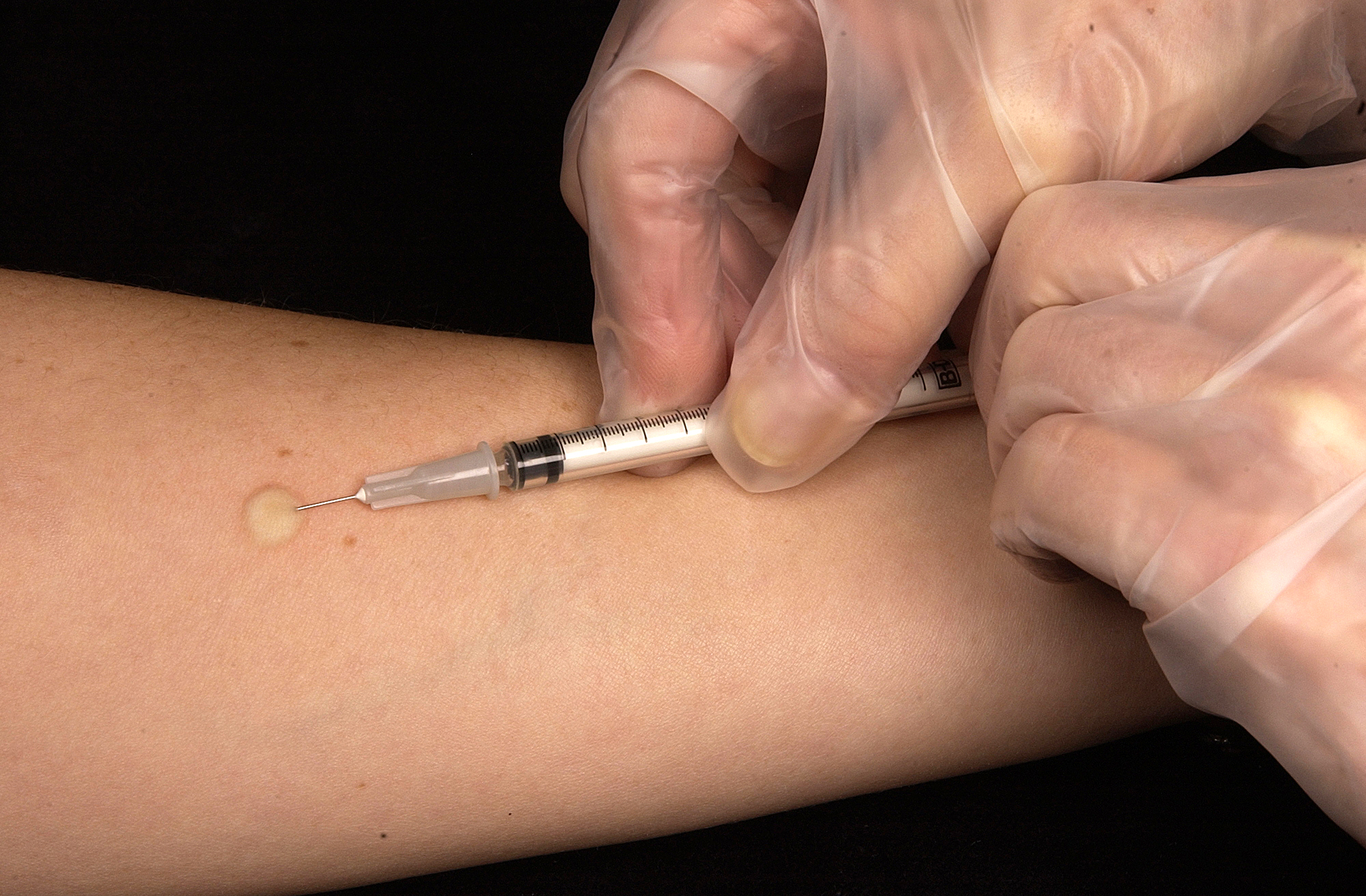
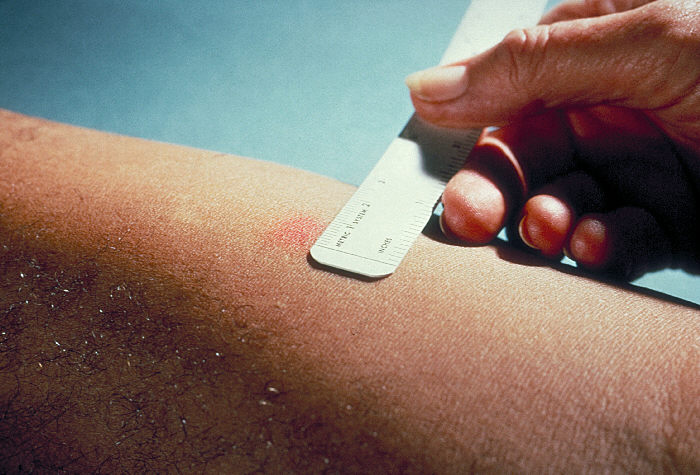
Extra-pulmonary disease
Start with the least invasive specimen possible for sampling suspected extra-pulmonary sites of disease.
Imaging
A PA chest radiograph (CXR), always include a Lateral film in children, is indicated in all cases of suspected tuberculous Primary Disease, Secondary Disease, Latent Infection, as well as the widespread involvement of Miliary TB.
Testing enables the clinician to classify the patient into one of three clinical states, which inform management:
Latent TB Infection (LTBI) — no disease: TST/QFT-G positive, CXR negative
- INH 10 mg/kg/day (up to 300 mg) for 6 to 9 months (for instance, this treatment is effective in preventing reactivation of TB in HIV positive individuals and also in the under 5-year old close contacts of active disease)
TB Infection — not clinically active: TST/QFT-G positive, stable CXR (old, healed)
- Old healed, not previously treated TB
- Old healed, previously treated TB
Suspected/Confirmed Active TB: TST/QFT-G positive &/or CXR positive &/or Sx/signs &/or smear/culture positive
Then classify cases according to infectivity:
| 0 = negligible infectivity | Extrapulmonary disease |
| 1 = low infectivity | Smear and culture negative pulmonary disease |
| 2 = medium infectivity | Smear negative, culture positive pulmonary disease |
| 3 = high infectivity | Smear positive, culture positive pulmonary disease or culture positive, cavitating pulmonary disease or culture positive laryngeal disease |
Management
Because tuberculosis is a chronic, transmissible wasting infection, the clinician must attend to issues of patient nutrition and hygiene, beyond instituting pharmacotherapy. Generally, a five-drug regimen for no less than six months, in susceptible TB, is employed:
- Rifampicin 600 mg per day: watch for hepatotoxicity
- Isoniazid (INH) 300 mg per day: watch for peripheral neuritis
- Streptomycin 15 mg/kg daily or two or three times weekly: dizziness, vertigo
- Pyrazinamide 150-200 mg per day: avoid in gout
- Ethambutol: watch for visual impairment
INH and Rifampicin alone are continued for a total of six months. Examine the sputum monthly until clear. Extra-pulmonary TB may require a prolonged 9-month course.
Note: it is often impossible to eradicate every tubercle from the body, bacilli often lying dormant, enveloped in fibrous tissue, from which they potentially reactivate; but, in general, a compliant patient with non-resistant pulmonary tuberculosis will become non-infectious after two weeks of appropriate anti-tuberculous therapy.
| Side effects of common anti-TB drugs [Medical Observer, March 2011] |
Notable facts
- In 2014, an estimated 190,000 people died of MDR-TB
- TB has almost halved since 1990, most of that improvement taking place since 2000
- In 2014, there were six million reported, of an estimated 9.6 million new (WHO), cases of tuberculosis, of which an estimated 480,000 were multi-drug resistant
- MDR-TB involves an estimated 3.3% of new cases of tuberculosis and 20% of previously treated cases
- In 2006, 1.7 million died of tuberculosis
- Culture positive, smear positive, cavitating pulmonary disease is highly infectious
- Rapid tests for tuberculosis are available: Xpert MTB/RIF; GeneXpert Omni; Xpert Ultra
- New drugs, such as TBA-354, are in advanced phases of clinical development bedaquiline (2013)
- delamanid (2014)
- Some fifteen vaccine candidates are in clinical trials
References
- MJA 2007;186:240-42
- Tuberculosis. Medical Observer. 10 October 2008
- Tuberculosis: Part 2. Medical Observer. 11 March 2011
- Global Tuberculosis Report, 2015 (20th Edition). World Health Organisation.
- Division of Global Migration and Quarantine, National Centre for Emerging and Zoonotic Infectious Disease, CDC, U.S. Department of Health and Human Services. Guidelines for Screening for Tuberculosis Infection and Disease during the Domestic Medical Examination for Newly Arrived Refugees. April 16, 2012
- Tuberculosis – air travel for patients with TB: Guidelines for GPs. Department of Health, State Government, Victoria
