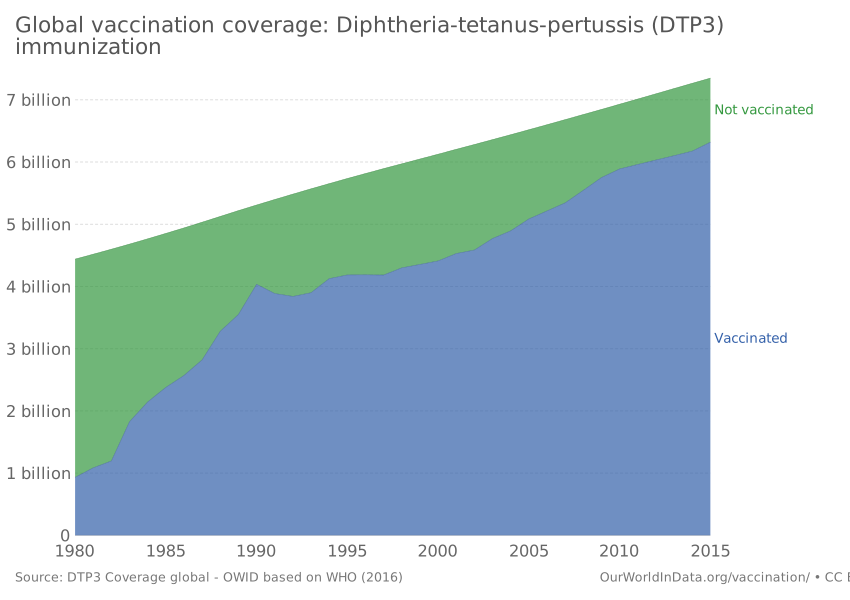
There is a Diphtheria outbreak in Australia not seen since the 1930s when universal vaccination began. Two hundred and 31 cases of Diphtheria have been reported so far this year. Most cases have occurred in the Northern Territory but also South Australia, Western Australia and now spreading to Queensland. Diphtheria was thought to be all but eradicated by 1979. Northern Territory Health has declared a Diphtheria outbreak and have taken measures to curtail the scourge. Diphtheria is known for causing a grey pseudo-membrane on the throat or on ulcers of the skin. Diphtheriae are a hardy bacteria of which some strains produces a toxin that shows tropism for the heart and nervous system. Toxigenic Diphtheria is neuro- and cardio-toxic. The outbreak in the dryer states is because of a small reservoir of infection having established in the Northern Territory. NT Health have put out an alert and recommendations for DTP (diphtheria, tetanus, pertussis) vaccinations particularly of Indigenous and immunosuppressed individuals. Because childhood immunity wanes by middle age in over half of a vaccinated cohort, these people are strongly encouraged to receive booster vaccination with Boostrix or Adacel diphtheria containing vaccines. Cases of Diphtheria present in one of a few number of ways. Respiratory diphtheria present with slowly progressive pharyngeal symptoms; the feared complication of which is pseudo-membrane formation and progressive neck swelling. Cutaneous diphtheria might be suspected in the contact of a known case who presents with a sloughy non-healing ulcer of well-demarcated edges. Unexplained cardiac, renal, or neurological disease are the late complications of diphtheria that can present days, weeks, or months after resolution of symptoms in an inadequately vaccinated person. Treatment per NT Health Interim guidelines is with oral Azithromycin 500 mg (10 mg/kg in children) daily for 7 days. Toxin-positive C. diphtheriae can be differentiated from toxin-negative C. diphtheriae in laboratory culture.